Fixtures - the 'unsung hero' in agentic test automation

In E2E tests, Page Object Models (POMs) were the “popular kids”. Everyone knew them, everyone praised them. Yet not many knew of (or extensively used) "fixtures".
While there are many use cases of fixtures, a prominent one is - they let you pipe pre-created entities to tests that represent specific situations (a user with a valid subscription, a premium tier org etc.).
Ok - before we go into why it matters, let's back off a bit.
Arranging the world-state for the test
Every functional test boils down to 3 steps (the 3A's):
Arrange -> Act -> Assert
In plain terms:
 Given a situation (e.g. a user with an expired credit card),
 When a set of actions are done (attempting checkout),
 Expect a defined outcome (error message, no order created).
Here’s where things went sideways for a long time.
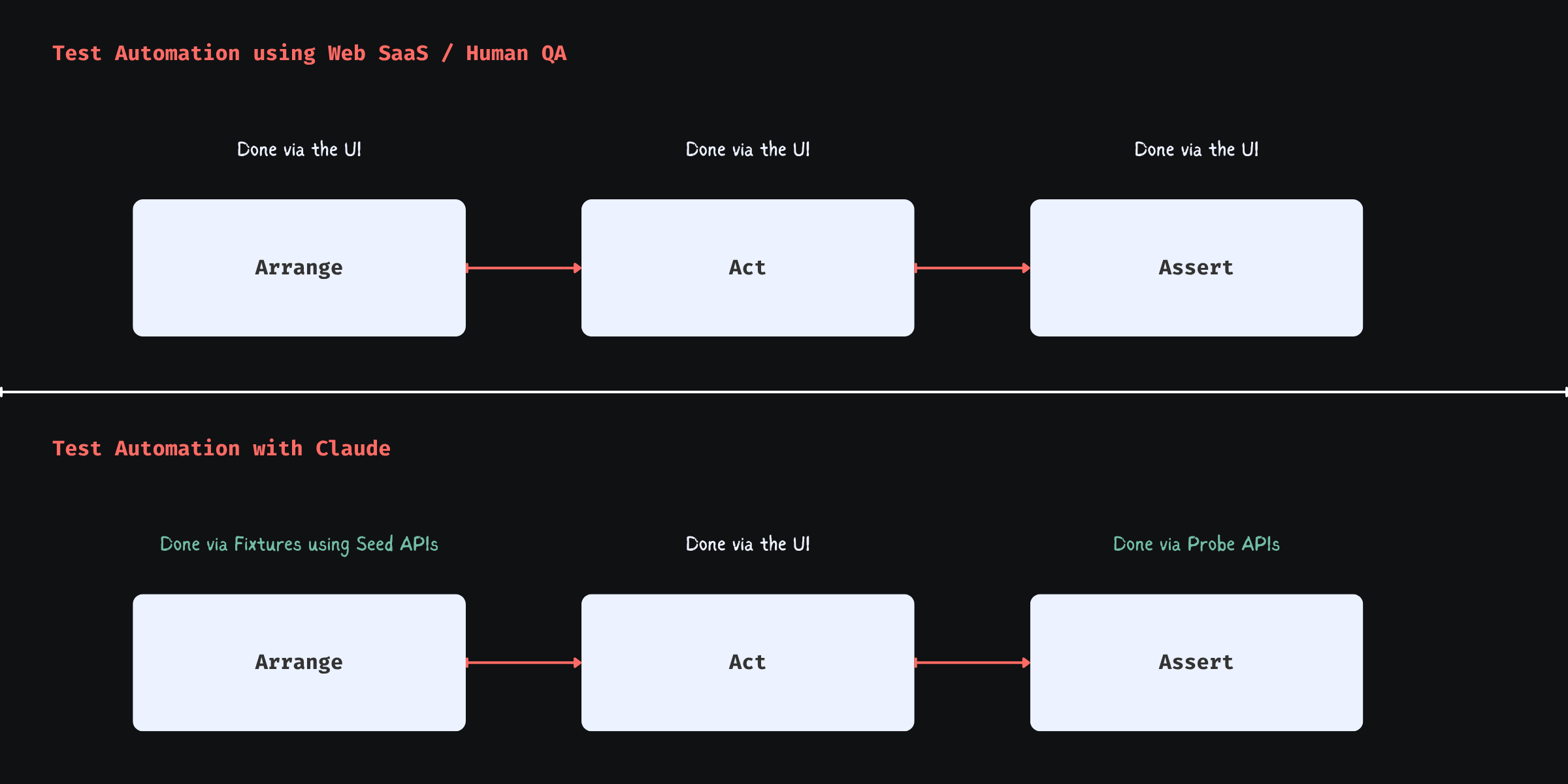
When humans were authoring tests - especially using web-based SaaS / No-code tools - they were constrained to the UI layer, due to a couple of reasons:
- Tools operated outside of the system
- QA lacked coding skills / were not allowed to work with system code due to organizational frictions
So everything had to be set up through the UI (or live system APIs), which made POMs the “sexy abstraction”: they made UI-driven setup bearable.
But that setup was never the ideal. It was the workaround.
Arriving at the situation is not the test. It is incidental complexity introduced by tooling and human limitations.
The Shape Shift in Test Automation with Claude
When Claude is authoring, it is not bound by that restriction. It has the full context of your codebase and can operate across layers. It can author seed / probe endpoints, generate data, and construct precise system states directly.
This is where fixtures shine.
Fixtures expose these pre-built states as reusable, composable building blocks:
- “User with expired card”
- “Account with failed payment retries”
- “Cart with out-of-stock item”
More importantly, fixtures provision those entities with full data-isolation per test run (so that parallel workers running tests, retries etc. don’t interfere with each other). This removes many anti-patterns common in pure UI-layer test authoring - such as depending on order of tests (one to create the entities, one to update, another to delete - each depending on prior).
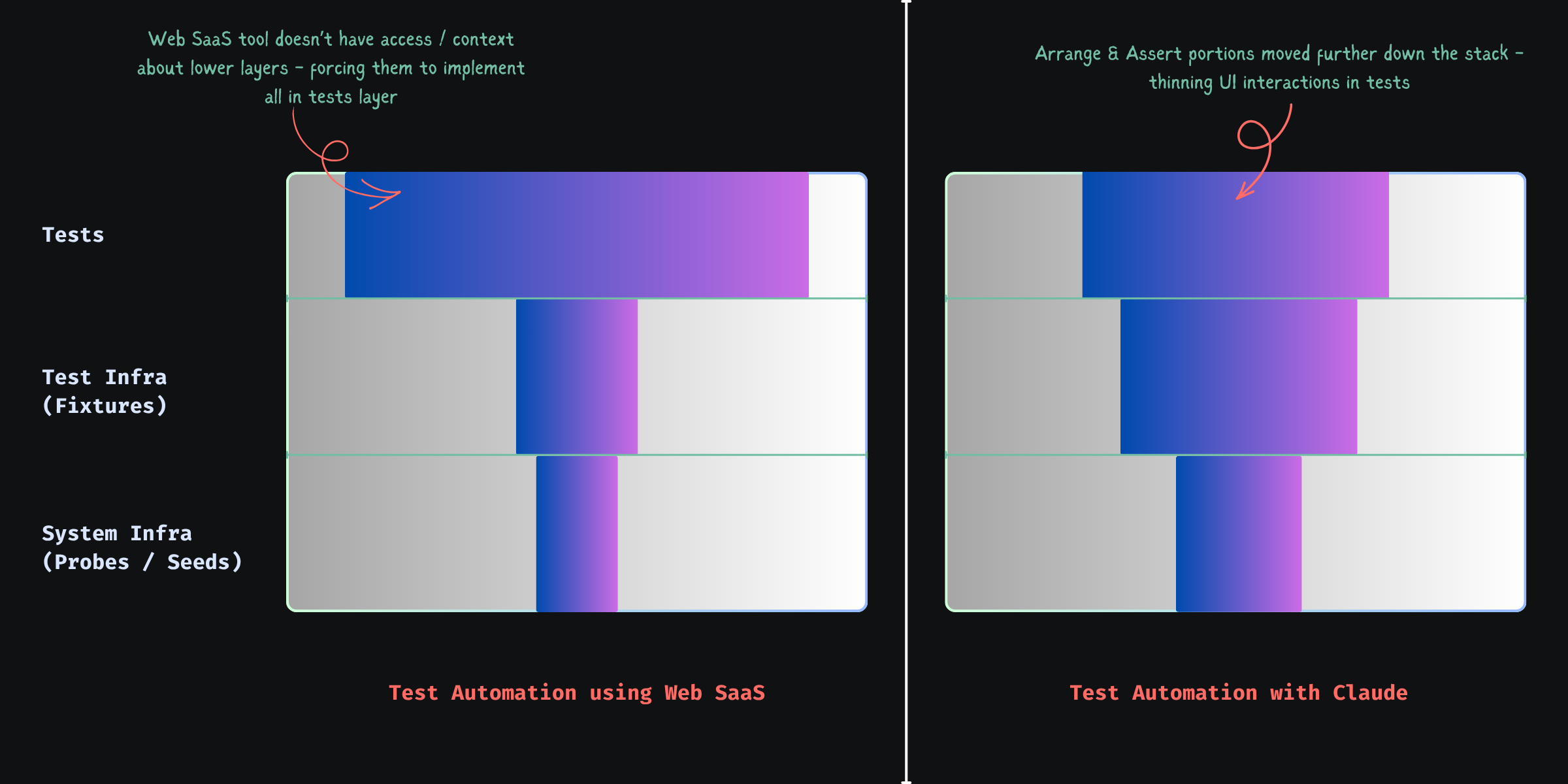
Now your tests change shape:
- Arrange → mostly handled via reusable, API-backed fixtures
- Act → only the actions that actually matter
- Assert → UI checks plus direct state validation via probe endpoints
The result: faster tests, more reliable tests, and far less noise.
TrueCoverage - Write fixtures that mirror real-world
Here’s where things get even more interesting:
What if Claude could learn what situations occur in the real world? Then, it can author fixtures that emulate them - prioritized by impact - resulting in coverage that actually de-risks your product against real user behaviour.
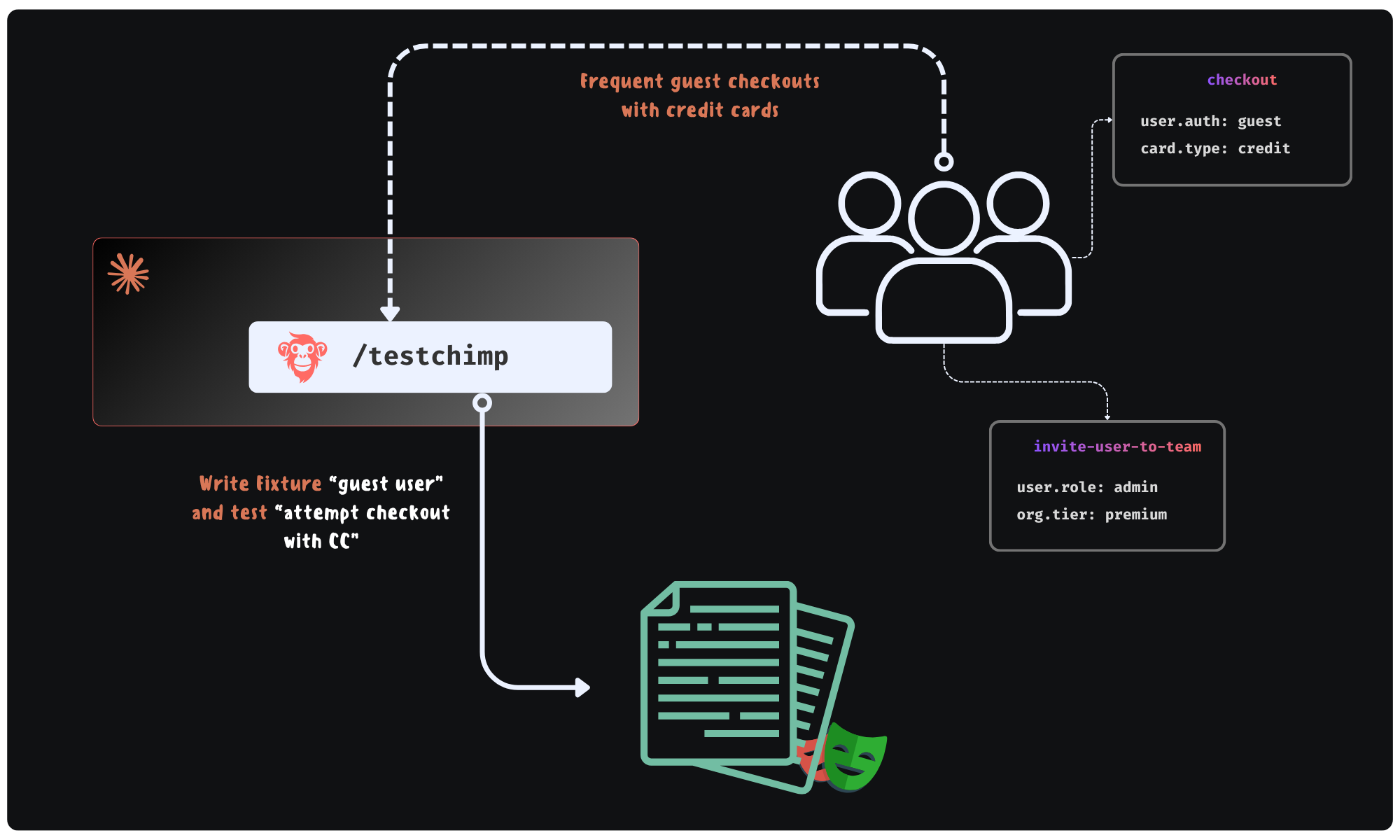
This is exactly what TestChimps’ TrueCoverage unlocks: a feedback loop - where agents can continuously learn from production insights and generate fixtures that mirror real-world situations.
- Not guessed. Not happy-path-heavy assumptions.
- Actual situations your users experience.
That’s when your test suite stops being synthetic - and starts becoming representative of “what your users experience”.
POMs helped us survive UI-driven testing.
Fixtures unlock systemic scenario coverage in the agentic automation era.